

As you approach age 65, understanding Medicare can feel overwhelming. With various parts,...
November Market Commentary - A Noisy Month, a Steady Outlook


November delivered a stretch of volatility that grabbed headlines, but it didn’t change the larger story. A mix of concerns about AI stocks, shifting expectations around Federal Reserve policy, and delays in economic data pushed markets around for a couple of weeks. By the end of the month, most major asset classes had stabilized and, in some cases, regained lost ground.
From my perspective, this was the kind of month that tests whether an investor reacts to the day-by-day noise or stays anchored to a long-term plan. Nothing in November materially altered the fundamentals that matter most.
| MTD% | YTD% | |
| NASDAQ | -1.51% | +21.00% |
| S&P 500 | +0.25% | +17.81% |
| Russell 2000 | +0.96% | +13.47% |
| MSCI World ex-USA*** | -0.01% | +29.21% |
| MSCI Emerging Markets | -2.38% | +30.41% |
| Bloomberg U.S. Agg Bond | +0.62% | +7.46% |
Source: The Wall Street Journal, Dimensional Returns
MTD returns: October 31, 2025–November 30, 2025
YTD returns: December 31, 2024–November 30, 2025
**in US dollars
A short risk-off period, then a rebound
For a short period, investors pulled away from some of the areas that have been strong this year. Technology stocks tied to artificial intelligence had their toughest week since April, partly because people began questioning whether the pace of spending and the valuations were sustainable. Even so, the underlying business results from companies like Nvidia remained solid, and several large tech names recovered after earnings were released.
Cryptocurrencies experienced a sharper swing. Bitcoin dropped more than 30% from its peak earlier in the fall, a reminder that speculative assets can climb quickly and fall just as fast. That’s not a prediction about where they go next; it’s simply an example of why they behave differently from traditional investments.
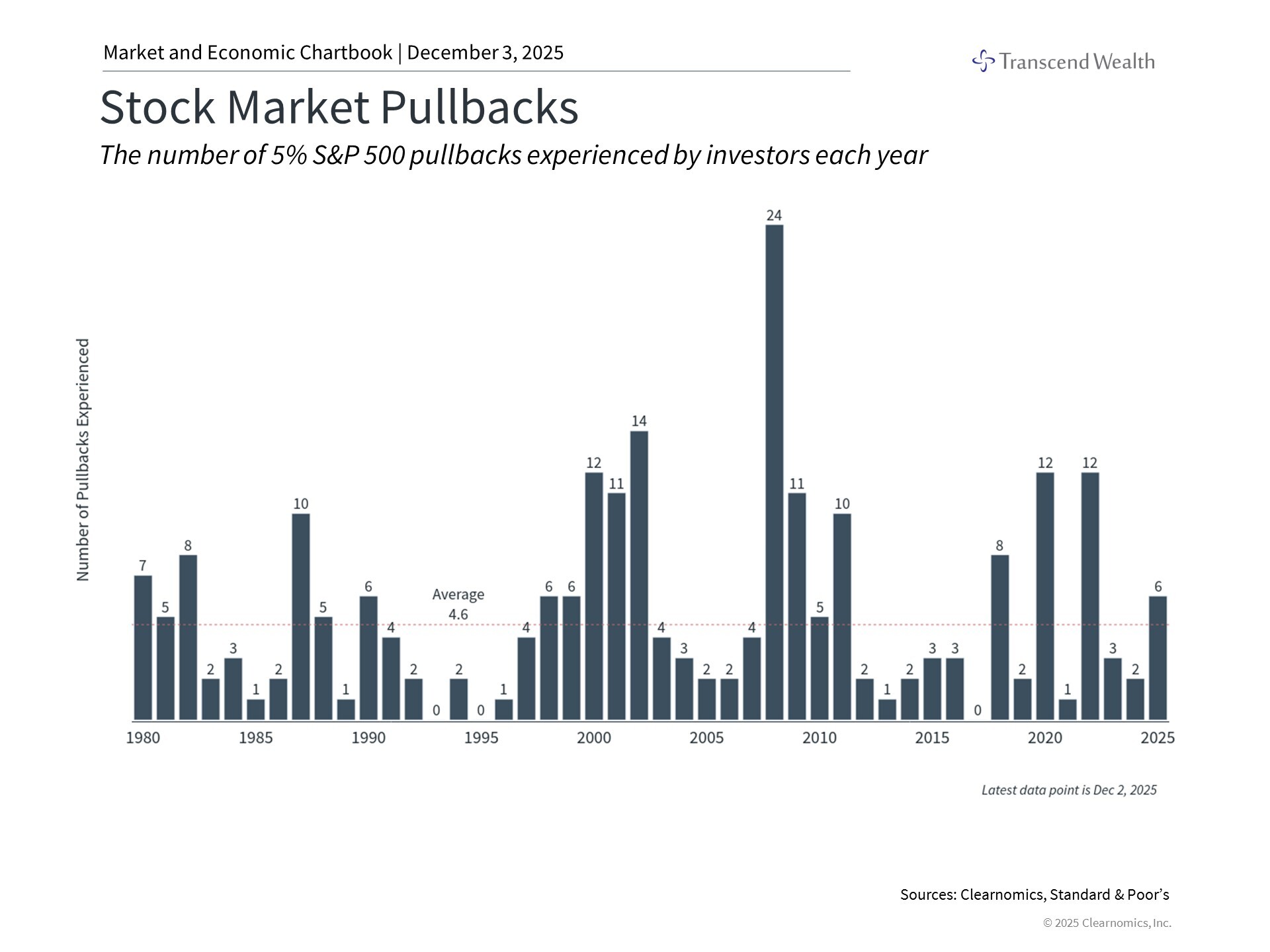
Meanwhile, the S&P 500 went through its sixth five-percent-or-greater pullback of the year. That may sound like a lot, but it’s normal by historical standards, and the index finished November slightly positive.
Bonds did what they’re meant to do
The bond market had a strong month. Long-term interest rates moved lower and the 10-year Treasury yield briefly dropped below 4%. When this happens, high-quality bonds tend to do well, and they did. The U.S. Aggregate Bond Index is up 7.5% for the year, its best showing since 2020.
This is exactly why a balanced portfolio matters. Bonds don’t grab headlines, but they often play their most important role during periods of uncertainty.
The shutdown muddied the economic picture
The 43-day government shutdown ended, but it disrupted the normal flow of economic information. Markets largely looked through the noise, though the lack of timely data added to the uncertainty.
When the delayed September employment report was finally released, it showed stronger hiring than expected. August was revised lower, revealing a small job loss. The unemployment rate moved up to 4.4%. That’s the highest level since 2021, but still low relative to history.
Because no surveys were conducted during the shutdown, there will be no full October jobs report. Some of that missing data will be folded into the November release. This is a good reminder that no single month tells the whole story, especially when the data itself is limited.
Fed expectations continued to move
Without a complete picture of the economy, investors kept adjusting their expectations around the next Federal Reserve move. As of now, the market is pricing in a rate cut in December and another one sometime in the spring or early summer.
Consumer sentiment also slipped. Many households are feeling pressure from prices, job concerns or simply the uncertainty of the environment. Even so, sentiment hasn’t meaningfully changed consumer spending.
Volatility is normal. It doesn’t feel normal in the moment, but it’s part of how markets work. November underscored the value of staying invested, staying diversified, and keeping perspective when the headlines get loud.
As we head into year-end, the focus shouldn’t be on guessing the next market move. It should be on making sure your financial decisions align with the life you want to live next.
If you’d like to talk through any of these trends in more detail, I’m always here.